 Employee Benefits
 HR & Compliance
 Technology
 Wellness
 PEO Solutions
A health FSA can be worth it, but only if you can use most of what you elect. In 2025, 47% of private-industry workers had access to one, yet access alone doesn't create value because the account rewards accurate medical-spending forecasts.
That shift matters. Flexible spending accounts have moved from a niche perk to a standard benefits tool in many workplaces, while the central decision remains intensely practical: will your household spend enough on eligible care before the plan deadline? A pre-tax contribution can reduce the cost of care you already expect, but an overly optimistic election can leave money behind.
For employees, the right answer depends on predictable prescriptions, dental work, vision expenses, dependent care, and the rules in the specific employer plan. For HR teams, the answer also depends on whether payroll, employee education, substantiation, and deadlines work together. The account itself is simple. The administration and forecasting determine whether it delivers.
Table of Contents
- The Growing Access to Flexible Spending Accounts
- How Flexible Spending Accounts Work
- FSA vs HSA Choosing the Right Tax-Advantaged Account
- The Real Cost of Forfeiture Risk
- Who Should and Should Not Use an FSA
- Plan Design and Enrollment Best Practices for HR
- Final Verdict on Flexible Spending Accounts
The Growing Access to Flexible Spending Accounts
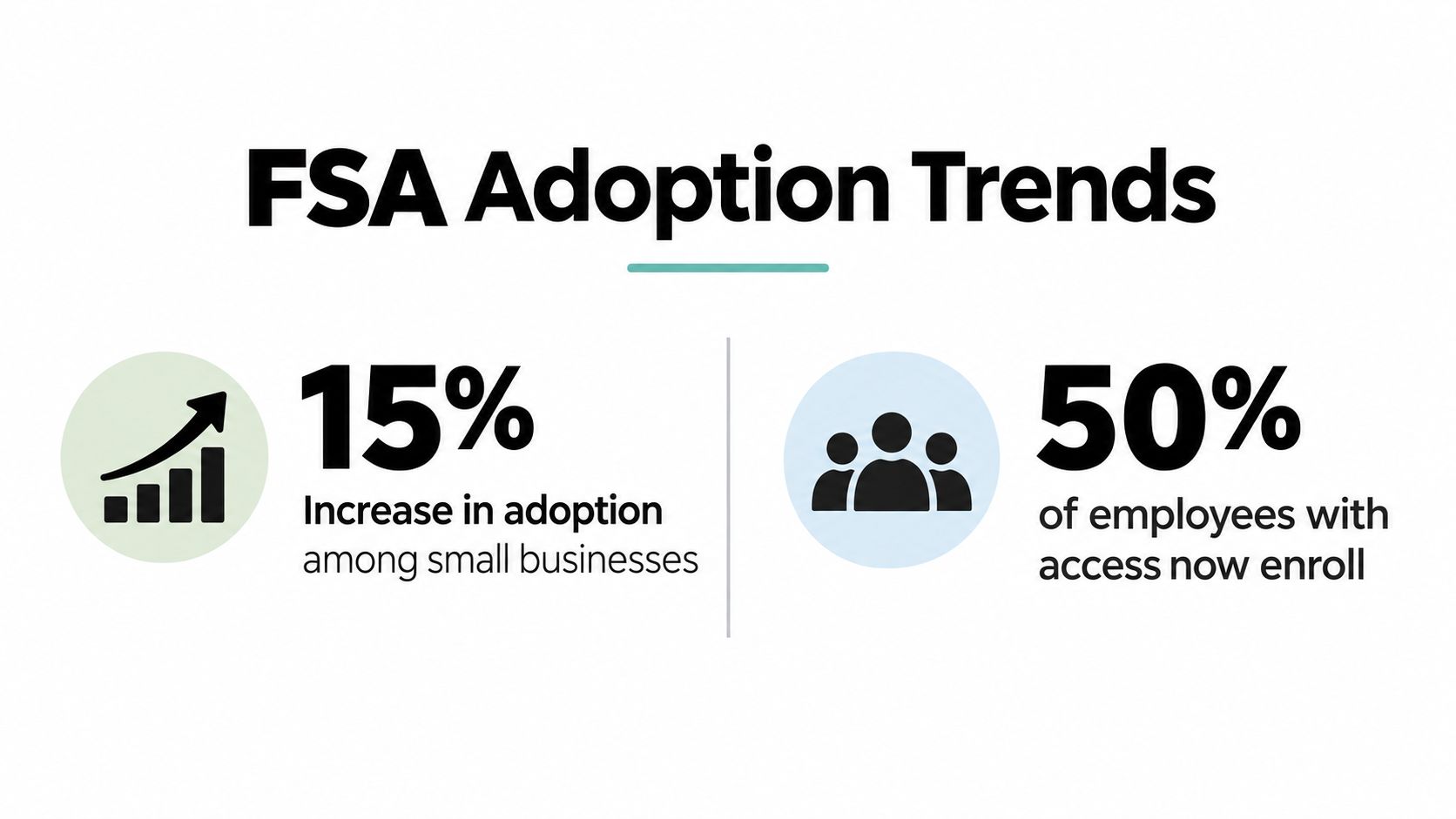
The U.S. Bureau of Labor Statistics reported that 47% of private-industry workers and 72% of state and local government workers had access to a healthcare FSA in 2025, compared with 40% and 59% in earlier periods, respectively. The BLS overview of flexible benefits in the workplace shows why the question “are flexible spending accounts worth it” now affects a much broader workforce.
A benefits review for a mid-sized employer often starts with a familiar pattern. Employees see an FSA during open enrollment, hear that contributions are pre-tax, and either elect a round number or skip the account because they remember the use-it-or-lose-it rule. Neither reaction is reliable. The useful question is whether the employee can connect the election to expenses they can reasonably identify.
Access signals a benefits shift
The adoption pattern tells employers something important. An FSA is no longer limited to the largest organizations or public-sector workforces. It has become part of the benefits conversation for private employers that want employees to manage eligible healthcare costs with pre-tax dollars.
Participation data also shows that many account holders use the benefit. The BLS source reports an average FSA contribution of $1,413, that 88% of accountholders took a distribution, and that the average distribution was $1,451. Those figures don't prove that every participant came out ahead, but they do show meaningful use among people who enroll.
Practical rule: Treat access as an opportunity, not a recommendation. The employee still needs a defensible spending estimate.
Why adoption doesn't settle the decision
A worker with recurring prescriptions, planned orthodontia, or known vision expenses can often forecast eligible spending more confidently than someone whose healthcare costs vary sharply from year to year. The same account can therefore be a sensible budgeting tool for one employee and a poor election for another.
For employers, broader access raises the standard for communication. A benefits guide that says only “save pre-tax” leaves out the decision that causes most dissatisfaction: how much to elect and when unused funds expire. Clear explanations of eligible expenses, plan deadlines, carryover or grace-period rules, and claim procedures help employees make informed choices without treating the FSA as free money.
How Flexible Spending Accounts Work
A health FSA lets an employee authorize a salary reduction before payroll calculates taxes. The employee chooses an annual election during enrollment, and the employer deducts that amount from paychecks according to the plan's schedule. The money then pays or reimburses qualified medical care expenses.
The tax benefit is straightforward. If an employee elects $1,000 and uses the full amount for eligible care, the employee has paid those expenses with pre-tax dollars rather than after-tax wages. The exact savings depend on the taxes that would otherwise apply to that salary, so there isn't one universal discount.
Follow the money from election to claim
The process usually looks like this:
- Estimate eligible expenses. Review recurring prescriptions, planned dental care, contact lenses, copayments, and other qualified costs.
- Make the annual election. The amount is generally fixed for the plan year unless the plan permits a change after an eligible event.
- Use the account for qualified care. The IRS describes qualified FSA expenses by reference to medical care under Internal Revenue Code section 213(d), including costs primarily related to diagnosing, curing, mitigating, treating, or preventing disease. The IRS-aligned guide to FSA-eligible expenses for 2026 can help employees organize those categories.
- Submit documentation when required. The administrator may request receipts or other substantiation before approving reimbursement.
- Check the deadline. Unused money is generally at risk unless the employer's plan includes an approved carryover or grace period.
In 2026, the IRS health FSA salary-reduction limit is $3,400, and a plan that permits carryover may allow up to $680 to move into the following plan year, as described in the IRS tax-inflation adjustment announcement.
Understand the protection your plan actually offers
Employers may choose a carryover or a grace period of up to two and a half months after the plan year ends. A plan can't offer both exceptions at once. Some plans provide neither, which makes the employee's forecast even more important.
The eligible-expense question can be surprisingly specific. For example, an employee buying mobility accessories may need to confirm whether the item qualifies under the plan and whether documentation is required. A practical resource on best walker cup holders may help someone evaluate an accessory, but the FSA administrator, not a retail description, determines reimbursement eligibility.
FSA vs HSA Choosing the Right Tax-Advantaged Account
An FSA and an HSA both help pay for qualified medical expenses with tax advantages, but they serve different planning needs. An FSA is usually a one-year spending tool offered through an employer. An HSA is available only to eligible people enrolled in a high-deductible health plan, and the balance can stay in the account beyond the current year.
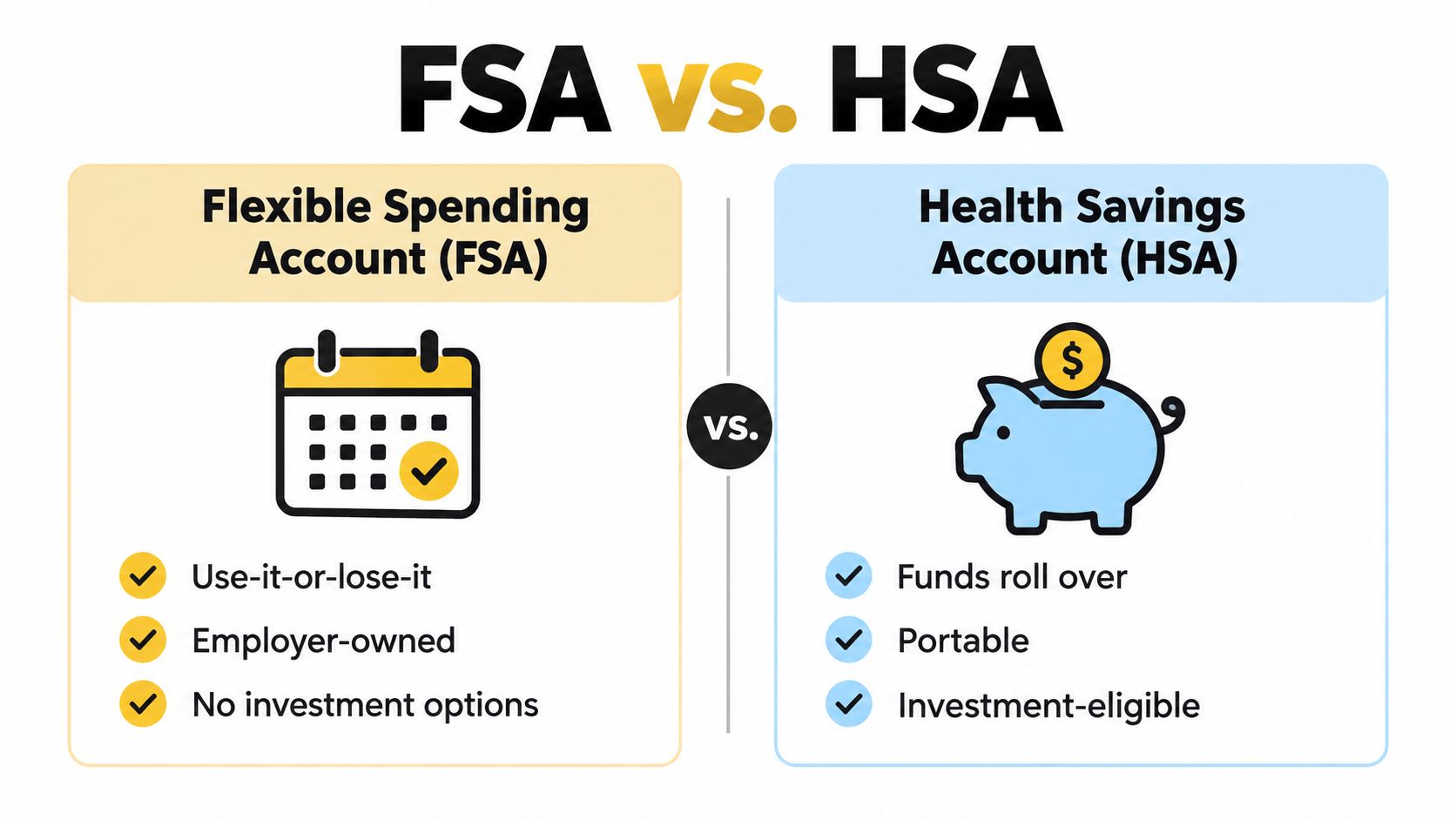
| Feature | Health FSA | HSA |
|---|---|---|
| Eligibility | Generally depends on the employer's offering and plan rules | Requires eligibility under an HSA-qualified high-deductible health plan |
| Main purpose | Near-term qualified healthcare spending | Current spending and longer-term healthcare saving |
| Rollover | Employer may choose a carryover or grace period, subject to IRS rules | Funds generally remain in the account |
| Ownership | Tied to the employer's plan | Owned by the account holder |
| Investment potential | Not an investment vehicle | May offer investment options, depending on the provider |
| Forecasting need | High, because unused funds may be forfeited | Lower for year-end timing because the balance remains available |
Match the account to your risk tolerance
Choose an FSA when you have a conventional employer health plan and can map out expenses within the plan year. Choose an HSA when you qualify for one and want ownership, portability, and funds that stay available for later care.
The 2026 limits also differ by account type. A health FSA and limited-purpose FSA share the $3,400 cap, while a dependent care FSA has a separate $7,500 limit, according to this 2026 FSA contribution-limit reference. Dependent care funds cover qualifying care expenses, not ordinary medical bills.
The question is how the account fits the plan design. Employers comparing offerings can review HSA options for employers alongside the FSA structure to see which setup matches eligibility, payroll administration, and retention goals. Employees comparing the two should also separate account mechanics from expense eligibility. A plain-English explanation of using Weight Method with HSA funds can add context, but the employer's plan documents and administrator still decide a specific claim.
For HR leaders, the operational choice usually comes down to the account that fits the health plan architecture and the workforce's spending patterns. An FSA can sit well beside a traditional plan. An HSA needs a different eligibility setup and a different employee mindset.
The Real Cost of Forfeiture Risk
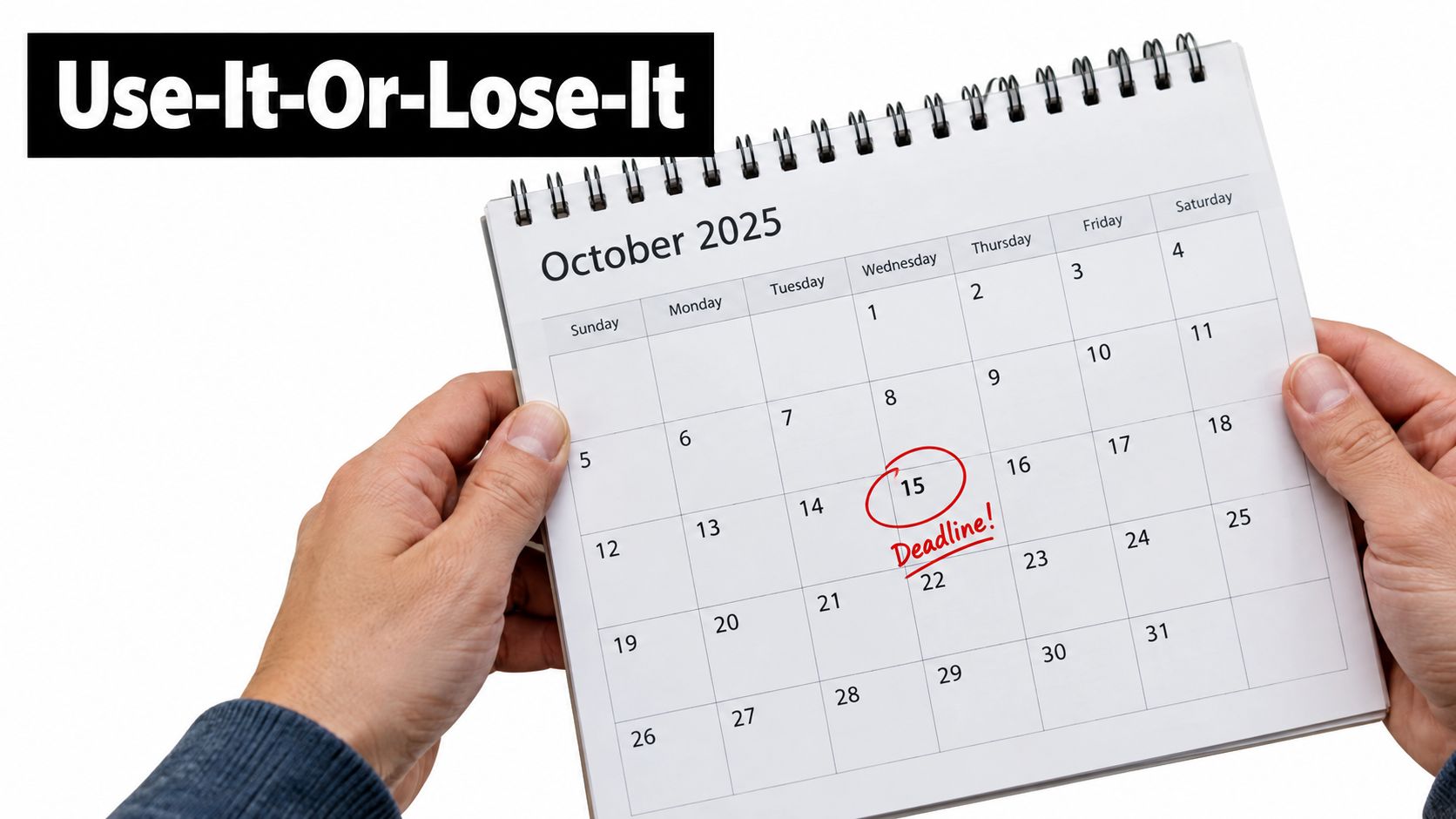
The strongest argument against an FSA is also the easiest to underestimate. If an employee contributes more than the amount used for qualified expenses, the unused balance may be forfeited under the plan's rules.
EBRI's 2023 analysis found that roughly half of FSA accountholders forfeited funds, with an average forfeiture of $436. Earlier EBRI reporting found that 52% forfeited an average of $441 in 2022, while the average contribution was $1,291 and 85% took a distribution. These figures appear in the EBRI FSA database update.
The break-even calculation
Consider an employee who elects $1,291, the average contribution cited in the earlier EBRI reporting. Suppose the employee's combined tax savings on the election would be $300. If the employee uses only $900 for eligible care and forfeits $391, the tax advantage doesn't automatically make the election profitable. The employee received $900 of qualified care using pre-tax funds, but gave up $391 of unspent money.
That example isn't a universal result because the tax savings depend on the employee's tax situation and payroll treatment. It demonstrates the right method: compare the value of eligible expenses paid through the account, the tax savings created by the election, and the balance that could be lost.
The practical break-even point is not the contribution limit. It's the amount you can spend confidently before the deadline.
A plan's carryover or grace period can reduce the exposure, but it doesn't remove the need to estimate. The permitted exception belongs to the plan, and employees should confirm which rule applies before making an election.
Why aggressive elections fail
Round-number elections are common because they feel simple. They also create risk when they aren't tied to a spending history. A worker may remember an unusually expensive medical year and assume it will repeat, or may budget for a procedure that gets postponed. If the expense never occurs within the qualifying period, the planned tax benefit becomes an exposure.
A better approach uses documented categories:
- Recurring costs: prescriptions and routine care that are likely to continue.
- Scheduled costs: orthodontia, dental treatment, contact lenses, or planned appointments.
- Uncertain costs: emergencies and medical events with no reliable timing.
Use the first two categories for the core election. Treat the third as a reason to keep the contribution conservative.
Who Should and Should Not Use an FSA
An FSA suits employees who can turn a benefits election into a spending plan. The strongest candidates aren't necessarily the people with the highest medical needs. They're the people who can identify eligible expenses, estimate their timing, and use the balance before the plan deadline.
A household with recurring prescriptions can start with an annual total based on actual refill patterns. Someone expecting orthodontia or scheduled dental care may have documentation from a provider that makes the estimate more credible. Contact lenses and planned vision expenses can also provide a clear basis for an election.
A practical fit test
Ask these questions before enrolling:
- Can I name the eligible expenses? If the answer is a list of recurring or scheduled costs, the account may fit.
- Can I estimate timing? A bill that may occur eventually isn't as useful as a cost expected during the plan year.
- Does the plan offer carryover or a grace period? Confirm the rule rather than assuming it.
- Can I absorb a possible forfeiture? If losing unused funds would disrupt your budget, elect less.
- Will my employment situation change? An employer-linked benefit requires careful review when a job transition is possible.
The account is less attractive for households with volatile medical spending. A complex condition, uncertain treatment schedule, or possible major procedure can make annual costs difficult to forecast. In that situation, an FSA may still work for a smaller amount based on known expenses, but it shouldn't be treated as a general emergency fund.
Enrollment test: Elect what you can document, not what you hope will happen.
The same logic applies to dependent care, although the eligible expense category differs from healthcare. Employees should keep medical FSA elections separate from dependent care planning and review each account's rules.
An FSA also isn't a substitute for cash reserves. It has a defined purpose, an annual election cycle, and administrative requirements. The best use case is a predictable expense that the employee would pay anyway, now funded in a more tax-efficient way.
Plan Design and Enrollment Best Practices for HR
HR and finance leaders should build the FSA around how employees use it, not just around compliance. Most enrollment questions are practical. Employees want to know what qualifies, when claims must be filed, which deadline applies, and how much they should elect.
Build the plan in operational steps
Start with the plan rules. Decide whether the health FSA will include a permitted carryover or a grace period, then put that choice in the plan materials. Do not describe unused funds as available indefinitely.
Connect the election to payroll. The payroll system should receive approved elections accurately, apply salary reductions consistently, and reflect changes allowed under the plan. Manual spreadsheet handoffs create reconciliation work that shows up later.
Teach forecasting, not just tax savings. During open enrollment, show employees how to review prescriptions, dental appointments, vision purchases, and scheduled care. A smaller election based on known expenses is safer than a large guess built around hoped-for spending.
Make substantiation visible. Employees need a clear path for uploading receipts, answering administrator questions, and checking claim status. A silent denial creates more frustration than a direct request for documentation.
Close the year deliberately. Send deadline reminders, explain the carryover or grace-period rule, and reconcile payroll, claims, and remaining balances. Year-end communication should reach employees early enough for them to act.
Reduce administrative friction
A centralized benefits workflow can connect plan selection, budgets, automated enrollment, payroll, onboarding, compliance, claims, and reporting. Benely helps companies compare plan options, set budgets, automate enrollments, and track open enrollment progress with connected payroll, onboarding, and compliance tools, according to Benely's benefits platform overview.
For employers evaluating a dedicated process, flexible spending account administration should cover more than enrollment. The practical checklist includes plan rules, payroll files, claims and substantiation, employee education, deadlines, reporting, and year-end reconciliation.
The right technology does not remove employee responsibility. It gives employees and administrators a shared view of elections, claims, deadlines, and remaining balances, which makes the benefit easier to use correctly.
Final Verdict on Flexible Spending Accounts
The answer to whether flexible spending accounts are worth it is simple: they are valuable when employees can predict eligible expenses and spend the balance under the plan's rules. That is where the pre-tax structure helps, especially for recurring prescriptions, scheduled dental work, orthodontia, contact lenses, and similar qualified care.
An FSA is not worthwhile just because an employer offers one. If an employee elects too much, the tax savings can disappear into forfeited dollars. Carryover rules or a grace period can reduce that risk, but the plan design still needs to be checked before enrollment.
For employees, the strongest election is conservative and based on actual spending, not hopeful estimates. For employers, the best setup pairs compliant plan design with payroll integration, clear education, claim substantiation, and deadline tracking. That keeps the benefit usable without overselling it.
A health FSA is a one-year budgeting tool, not a savings account built for the long haul. Use it for costs you can reasonably forecast, avoid electing more than you are likely to spend, and review the plan documents before open enrollment closes.
Benely supports employers with a centralized benefits process that connects plan comparison, budgets, automated enrollment, payroll, onboarding, compliance, and open enrollment tracking.