 Employee Benefits
 HR & Compliance
 Technology
 Wellness
 PEO Solutions
In 2026, 39% of employees said they delayed or skipped medical care in the previous year because they weren't sure what their health plan covered, according to the Selerix Employee Benefits Survey. That's not a minor service inconvenience. When employees can't get a clear answer about coverage, the problem can reach their health, their workday, and their trust in the benefits they're offered.
Benefits customer service works when employees can get understandable, timely guidance throughout the year, not just during open enrollment. For HR leaders, the test isn't how many calls a partner answers. It's whether employees understand their choices, payroll and enrollment records are accurate, and someone takes ownership when a claim or life change creates a problem.
Table of Contents
- What Benefits Customer Service Means in 2026
- The Business and Employee Impact of Benefits Service
- KPIs and Operational Inputs Worth Tracking
- What Happens When a Claim Is Denied or Mishandled
- Supporting Employees Through Major Life Transitions
- Choosing a Benefits Partner Without Getting Burned
- A Practical Checklist and What to Do This Week
What Benefits Customer Service Means in 2026
Benefits customer service is a year-round decision-support function covering onboarding, enrollment, qualifying life events, claims, denials, renewal, and questions that arise after employees choose coverage. Set the expectation clearly: employees should leave each interaction knowing what to do, who owns the next step, and how to confirm resolution.
The Selerix survey report found that only 27% of employees said they understood their benefit options perfectly, 20% said they'd missed work specifically to resolve a benefits issue, 35% experienced regret after enrollment, and 26% either didn't receive benefits or weren't sure whether they did. Those findings justify treating coverage questions and enrollment problems as service responsibilities with assigned owners.
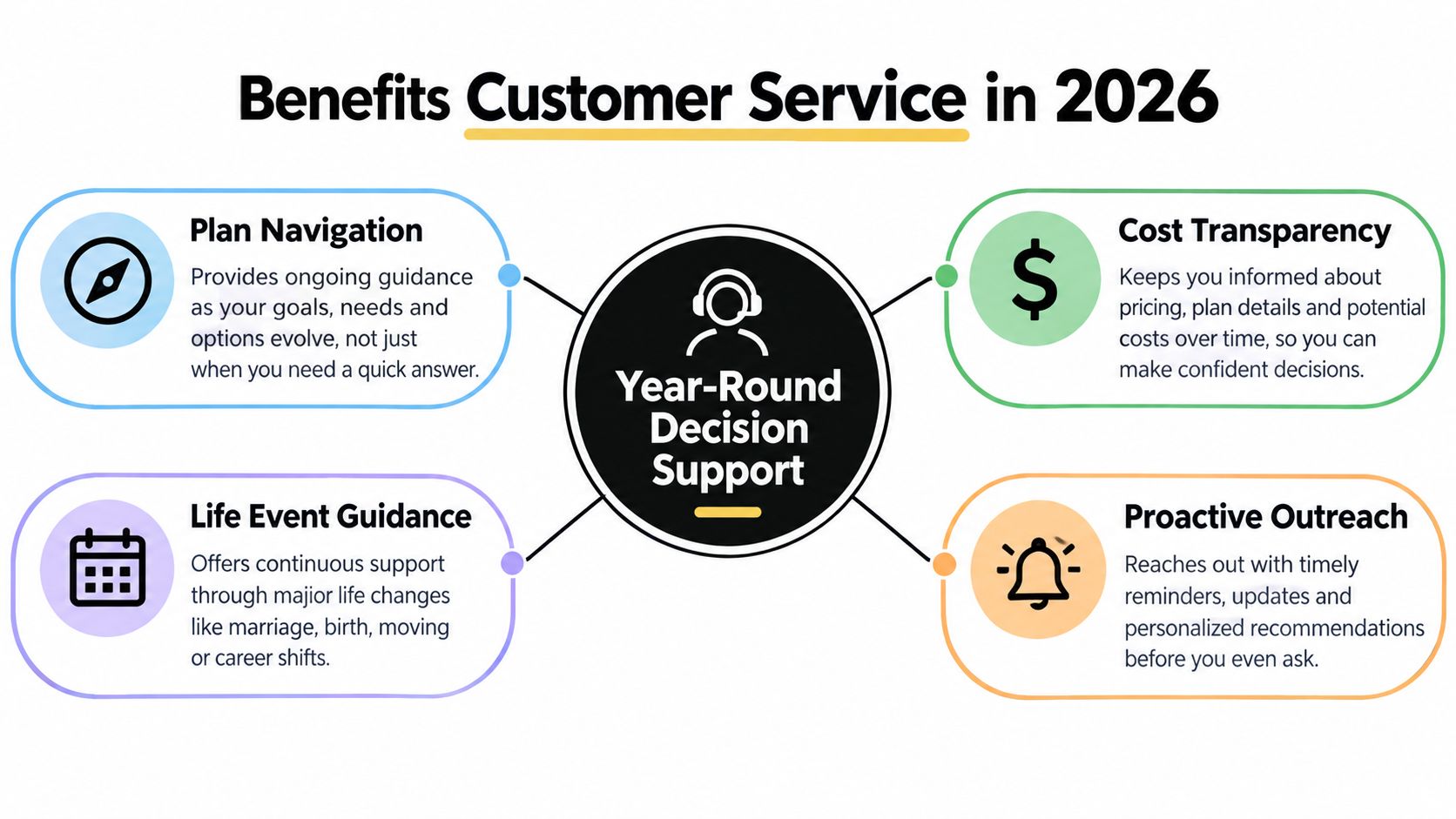
What employees need help with
Employees need plain answers about deductibles, provider networks, eligibility, claims, and deadlines. They need help checking whether a doctor is in network, understanding potential costs, reading an explanation of benefits, and identifying whom to contact about an incorrect bill. Require support teams to explain how the relevant terms apply to the employee's question.
Document delivery alone leaves that work unfinished.
Benefits support should connect answers across the employee's coverage history and records. A new hire needs help comparing options. An employee adding a dependent needs eligibility guidance and confirmation that enrollment and payroll records match. A denied claim requires someone to identify the reason, gather the relevant documents, and assign an escalation owner.
Use triage to separate routine questions from time-sensitive problems: check whether care is being delayed, whether a claim or enrollment deadline applies, and whether coverage or deductions need correction. Then assign ownership and confirm the outcome.
The working definition remains simple: benefits customer service helps employees understand coverage, make informed decisions, and resolve benefits problems with clear ownership and follow-through.
Evaluate that work against retention, payroll accuracy, missed care, and enrollment regret. Ask prospective partners how they connect resolved cases to those outcomes and prevent employees from repeating their story across disconnected systems.
The Business and Employee Impact of Benefits Service
Benefits customer service affects retention, payroll accuracy, missed care, and enrollment regret. Judge service against those outcomes. Employees need to understand what they selected, trust that deductions match their coverage, and get help before a benefits problem interrupts care.
For retention, keep communication active throughout the year. SHRM, citing MetLife employee-benefits research, reported that employees who would strongly recommend their employer as a great place to work were three times more likely to be satisfied with their benefits than other employees, as detailed in its report on benefits communication. That association supports investing in benefits satisfaction; it does not establish that service alone prevents turnover. Give employees access to guidance after enrollment, when they start using coverage and discover what their choices mean.
Where service quality affects the business
Limited attention makes benefits communication a service problem. Long plan documents and annual announcements leave employees with too much interpretation to do. Use concise explanations and decision aids, backed by a knowledgeable person who can answer questions about the employee's circumstances. Otherwise, HR inherits the confusion through repeated questions and corrections.
Payroll errors carry a different cost. An enrollment change that fails to reach payroll correctly can produce deductions that conflict with coverage records. Require confirmation across enrollment, carrier, and payroll records, especially after life events. Centralizing service still requires process controls and a clear owner for discrepancies.
Care delays deserve priority.
A denied claim and a routine coverage question should receive different levels of urgency. Ask whether the employee is postponing treatment or facing an approaching deadline, then give the case an accountable escalation owner. During life-event transitions, prioritize coverage continuity and deduction corrections. This triage connects service decisions to business consequences without treating every request as equally urgent.
| Impact Area | Weak Benefits Service | Strong Benefits Service |
|---|---|---|
| Retention | Employees struggle to recognize the value of their benefits. | Year-round guidance supports benefits satisfaction and confidence in the employer. |
| Payroll accuracy | Enrollment mismatches lead to disputed deductions and repair work. | Confirmed changes help HR catch discrepancies before they persist. |
| Missed care | Unresolved coverage or claim questions leave employees uncertain about seeking care. | Time-sensitive cases receive priority and escalation ownership. |
| Enrollment regret | Employees discover coverage limitations after making a choice. | Decision support explains trade-offs before employees commit. |
These outcomes also shape HR workload. Preventable confusion consumes time that should go toward resolving difficult cases.
Benefits belong within the wider employee experience. HR leaders can browse employee experience concepts to frame that connection. Before signing with a partner, ask for examples showing how its service addresses deduction errors, delayed care, and regretted enrollment choices. Require evidence of resolved problems alongside descriptions of its support channels.
KPIs and Operational Inputs Worth Tracking
A ticket count doesn't tell you whether employees got a useful answer. Track the measures that reveal whether support resolves the underlying issue, passes accurate data to carriers, and leaves employees clear about what happens next.
Start with question resolution time and repeat-contact rate. Fast replies are useful only if the employee doesn't have to contact support again to get the same issue fixed. First-pass accuracy shows whether the original answer or transaction was right, while enrollment completion rate helps identify where employees abandon or miss required steps. Post-interaction satisfaction can show whether employees felt heard and understood the resolution.
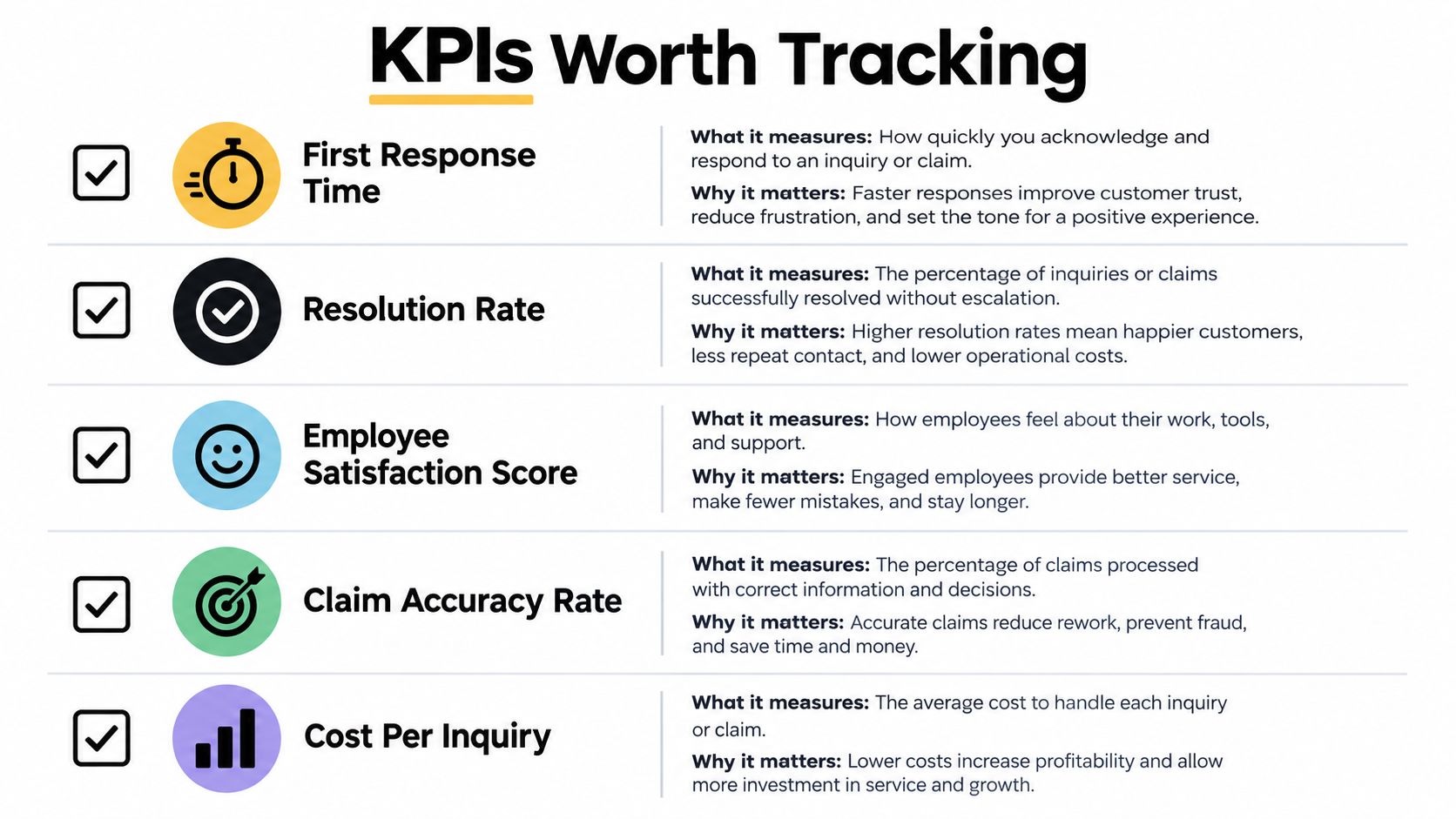
Connect each metric to a process
A useful scorecard pairs each measure with the operational input that can improve it:
- Resolution time: Track how long employees wait for a complete answer, not just an initial acknowledgment. Clear routing and access to plan-specific records help support staff respond with context.
- First-pass accuracy: Check whether an enrollment or eligibility update reaches the carrier correctly. Structured eligibility data and validation rules for dependents and effective dates catch errors before submission.
- Repeat-contact rate: Identify questions that return because the employee received an incomplete answer. Ticket histories and documented handoffs help the next representative continue the case instead of restarting it.
- Enrollment completion: Watch for unfinished elections and missed steps. Timely reminders and easy-to-understand decision support can help employees complete the process.
- Carrier-confirmation latency and correction aging: Track how quickly carriers confirm transactions and how long errors remain unresolved. Automated acknowledgments, exception queues, and audit logs make pending issues visible.
- Post-interaction satisfaction: Ask employees whether the answer was clear and the next step understood. A short survey can highlight confusing guidance that operational measures may miss.
Historical findings show why these checks matter. An Aflac-reported study found that 77% of workers admitted making benefits mistakes during open enrollment, while only 33% said they always fully understood deductible costs, according to the report on open-enrollment mistakes. Use that evidence to justify measuring your own starting point, not to assume your workforce has the same results.
Don't optimize for activity. Raw call volume can rise because answers are hard to find or problems keep coming back. Track accuracy, resolution, and employee understanding instead.
For a practical way to gather employee feedback, use a structured employee benefits survey alongside service data. Review the scorecard with HR and finance, then assign an owner to each process gap. That turns reporting into operational improvement rather than a dashboard no one acts on.
What Happens When a Claim Is Denied or Mishandled
A denied claim isn't automatically proof that the employee chose the wrong plan or that the carrier made the right decision. New York's 2025 Health Care Bureau recorded 4,890 complaints, with 13% involving claims-processing or payment errors and 10% involving health-plan denials, in its health-care complaint report. The right response is to determine what happened before sending the employee back to a general insurer phone line.

Triage the issue before escalating
Say an employee receives a bill after a visit and sees that the claim was denied or paid incorrectly. HR or the benefits support team should first help the employee locate the explanation of benefits (EOB) and compare its service dates, billing codes, and payment details with the provider's bill. The provider's billing office may need to correct a coding or submission error before the carrier can process the claim accurately.
If the records don't explain the decision, ask the carrier for the specific denial reason and any relevant clinical policy. When the claim appears to have been processed incorrectly, request reprocessing and keep a record of the case number, dates, and supporting documents. A guide to common insurance claim-denial reasons can help employees prepare focused questions, but the plan's explanation and appeal rules should drive the next step.
If the carrier upholds a denial, the employee may have the right to file an internal appeal. A consumer generally has 180 days after receiving a denial notice to submit one. Insurers generally must decide within 30 days for a service not yet received or 60 days for a service already received. For an urgent-care appeal, the plan must decide as quickly as the medical situation requires and no later than four business days after receiving the request, according to HealthCare.gov's internal appeals guidance.
Many disputes aren't just a responsiveness problem. A provider billing mistake or a plan-administration error can send an employee into a claims loop, and a generic phone number won't necessarily identify the source.
Assign ownership and keep a record
The employee should provide the EOB, bill, denial notice, and relevant correspondence. The provider should verify its billing details and correct errors it made. The carrier should explain its decision, reprocess eligible claims, and provide the appeal route. HR or a broker can help organize records, confirm the employee's enrollment details, and track the handoff, but shouldn't promise a particular appeal outcome.
Use a case log that records who owns the next action, what documentation is outstanding, and when to follow up. For complex situations, health advocacy support for employers and employees can help employees manage the process without asking HR to interpret every clinical or plan-administration detail.
Here's a short explanation of the appeal journey and the importance of following the right steps:
Supporting Employees Through Major Life Transitions
Benefits questions often become urgent when an employee changes jobs, starts or returns from leave, marries, or adds a child. During these transitions, employees need specific answers about coverage dates, payroll deductions, dependents, prescriptions, notices, and deadlines. A static plan PDF can't tell someone which step applies to their situation or who can confirm it.
Selerix's 2025 survey found that only 39% of ACA-eligible respondents considered the guidance they received clear, and only 33% of COBRA-eligible respondents said their guidance was clear, according to its survey announcement. That's a strong argument for treating transition support as a workflow, not a link in an exit email.
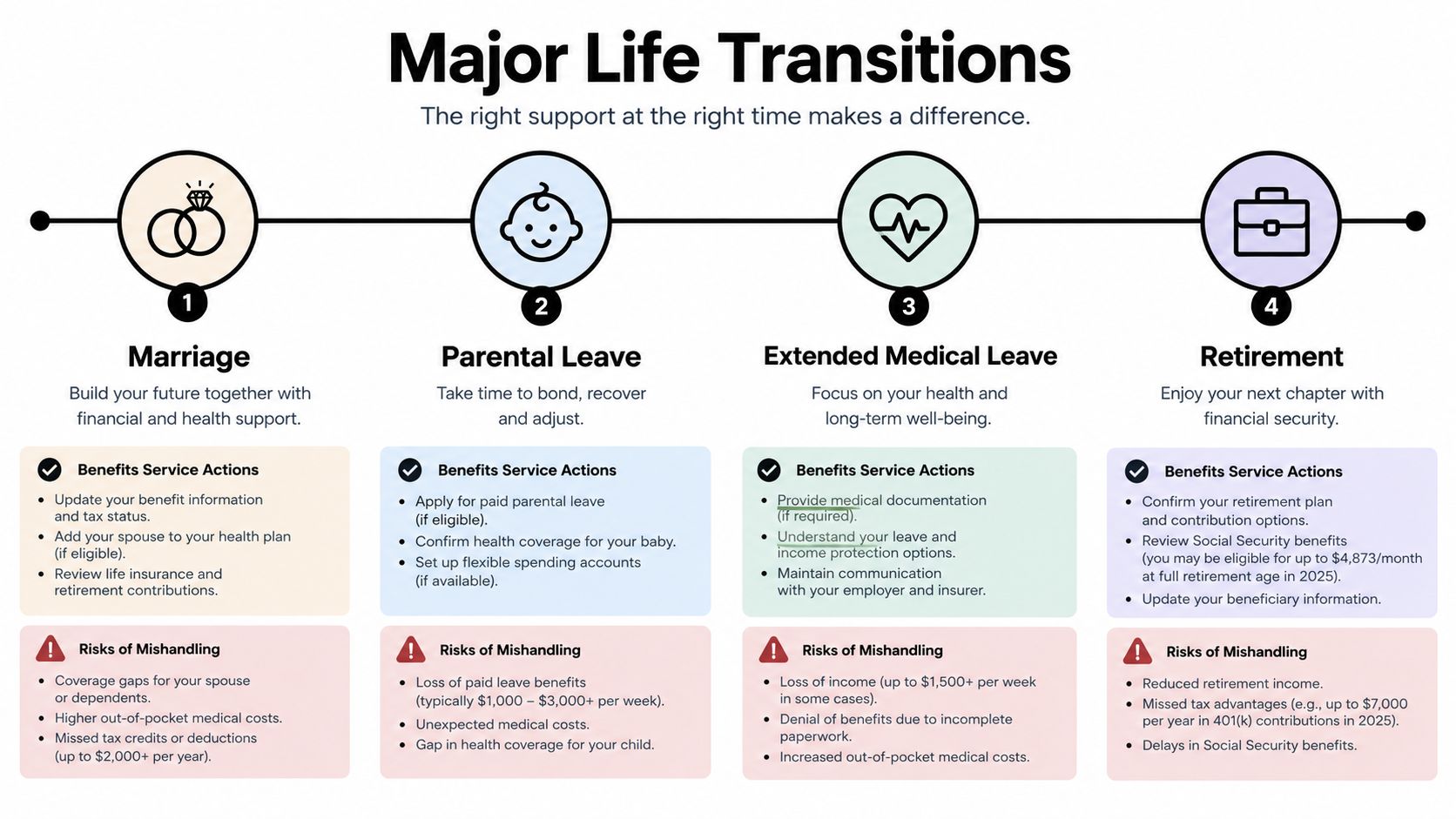
Build a transition handoff, not a document dump
A good handoff starts with the triggering event and a clear owner. When someone leaves employment, HR should explain which notices will come from the employer and which may come from a plan or administrator, clarify where the employee can confirm premium responsibility and election deadlines, and provide a named contact for unresolved questions. For leave, new-hire enrollment, marriage, or a new dependent, explain how the event affects eligibility, elections, payroll, and coverage dates.
Use automated, status-triggered messages for reminders and standard instructions, then make a knowledgeable person available for exceptions, disputes, and sensitive family circumstances. Automation can flag a pending task; it shouldn't force an employee to interpret a legal notice alone. Because many employees have limited time to review benefits information, keep messages concise and give them a clear path to an informed person rather than relying on long documents.
A transition message should answer three questions plainly: What changes, what must the employee do next, and who can confirm that the change is complete?
Make communications mobile-friendly, accessible, and available in the languages your workforce needs. Before closing a transition ticket, confirm that enrollment or termination data reached the carrier, payroll reflects the change, and the employee knows where to direct a coverage question. Family changes can also bring personal stress. When a divorce affects benefits decisions, sensitive communication matters, and resources on coping with divorce emotionally may help employees find broader support beyond the benefits process.
Choosing a Benefits Partner Without Getting Burned
A benefits partner should do more than provide a phone number and forward plan documents. In practice, the difference is whether the partner can connect employee questions to enrollment records, payroll changes, carrier status, and a clear escalation path.
| What to Evaluate | Strong Benefits Partner | Common SMB Friction |
|---|---|---|
| Service ownership | Centralized records and named ownership from question to resolution | Employees repeat their story across disconnected contacts |
| Enrollment and data | Automated enrollment, validated eligibility, and carrier confirmations | Manual updates and unclear transaction status |
| Human guidance | Knowledgeable HR specialists for plan questions and exceptions | Generic routing and long waits for a useful answer |
| Escalation | A structured process for claims, denials, and disputes | Employees are sent to a general number without help preparing |
Ask prospective partners who handles a claim question, how they verify a carrier received an enrollment, and what happens when a case remains unresolved. Request a walkthrough of the actual employee experience, including how a worker compares options, receives confirmation, and gets help after enrollment. If the answer focuses only on an app or a call center, ask how the partner handles exceptions that require context and follow-through.
Benely provides a centralized employee platform for comparing more than 4,000 health plans from carriers including Aetna, Kaiser, Anthem, Blue Shield, and UnitedHealthcare. Its model also includes automated enrollment, connected payroll and compliance tools, and certified HR specialists. For companies assessing whether outside administration fits their team, its employee benefits administration outsourcing information offers a starting point for comparing responsibilities and support.
Benely also shops PEO solutions in one place for organizations considering a co-employment model. Treat any provider example as a prompt to test service standards, not a substitute for due diligence. Check who responds, what systems connect, how records are documented, and whether employees can reach a person when a routine answer won't solve the issue.
A Practical Checklist and What to Do This Week
Ask your team: What's the average time to resolve a question? How often are cases accurate on the first pass, reopened, or left unfinished? Do you measure enrollment completion and post-interaction satisfaction? Who owns transitions, and how does HR track denied claims through appeal?
This week, benchmark your current measures against the cited LIMRA and HHS OIG findings, audit your denial and life-transition workflows, and compare partners using the criteria above. Benefits customer service isn't just an HR cost. It affects retention, payroll accuracy, and workforce health.
Visit Benely to compare benefits options, review how enrollment and support connect to payroll, and assess where your current service process leaves employees chasing answers. Ask for a walkthrough of claims and life-event support before choosing a partner, and use that conversation to test whether the service matches what your workforce needs.