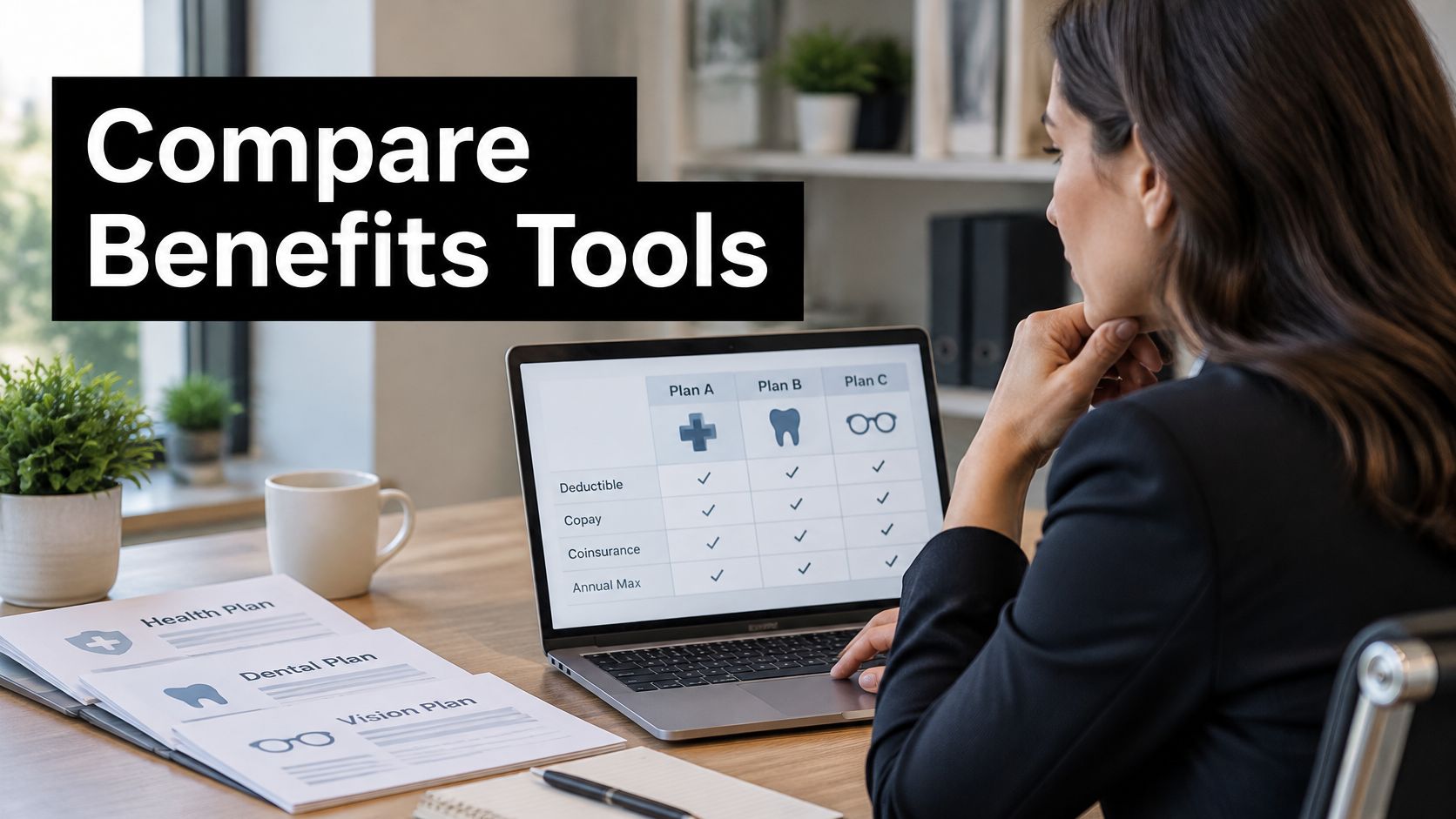
You're the HR manager who receives forty benefits questions in the week before enrollment closes. One employee wants to keep a specialist, another is comparing a spouse's coverage, and someone else wants to know whether a lower premium offsets a higher deductible. Your plan comparison chart contains the details, but employees still need help applying them.
Benefits decision support tools aim to answer those questions before they reach HR. They collect information about household needs, expected healthcare use, finances, and preferences, then explain trade-offs or recommend coverage. They can make enrollment easier, but they can't guarantee future medical expenses, correct incomplete plan data, or make an unsuitable provider network acceptable.
Keep official plan documents, carrier summaries of benefits and coverage, and current official IRS guidance on HSA and FSA rules close at hand. A recommendation is a starting point, not the governing coverage document. For a broader view of how guidance fits into brokerage, enrollment, and ongoing administration, visit Benely's benefits administration website.
The useful distinction isn't which vendor mentions AI most often. It's how much change the employer must absorb:
- Service-led support combines plan selection, administration, and employee assistance.
- Guidance layers can sit alongside an existing enrollment system.
- Platform-connected tools make most sense when you already use, or intend to adopt, the surrounding administration software.
The comparisons below identify those commitments, the inputs employees must supply, and the handoffs that deserve attention.
Table of Contents
- 1. Benely
- 2. ALEX by Jellyvision
- 3. Nayya
- 4. WEX Enrollment Decision Support
- 5. ADP Benefits Decision Support, powered by Nayya
- 6. Paylocity Benefits Decision Support
- 7. Benefitfocus Benefitplace Decision Support
- 8. PlanSource DecisionIQ
- 9. PERKY Benefits
- 10. Healthee
- How the 10 Benefits Decision Support Tools Differ in Pricing and Scope
- Choosing the Right Decision Support Tool for Your Enrollment Process
1. Benely
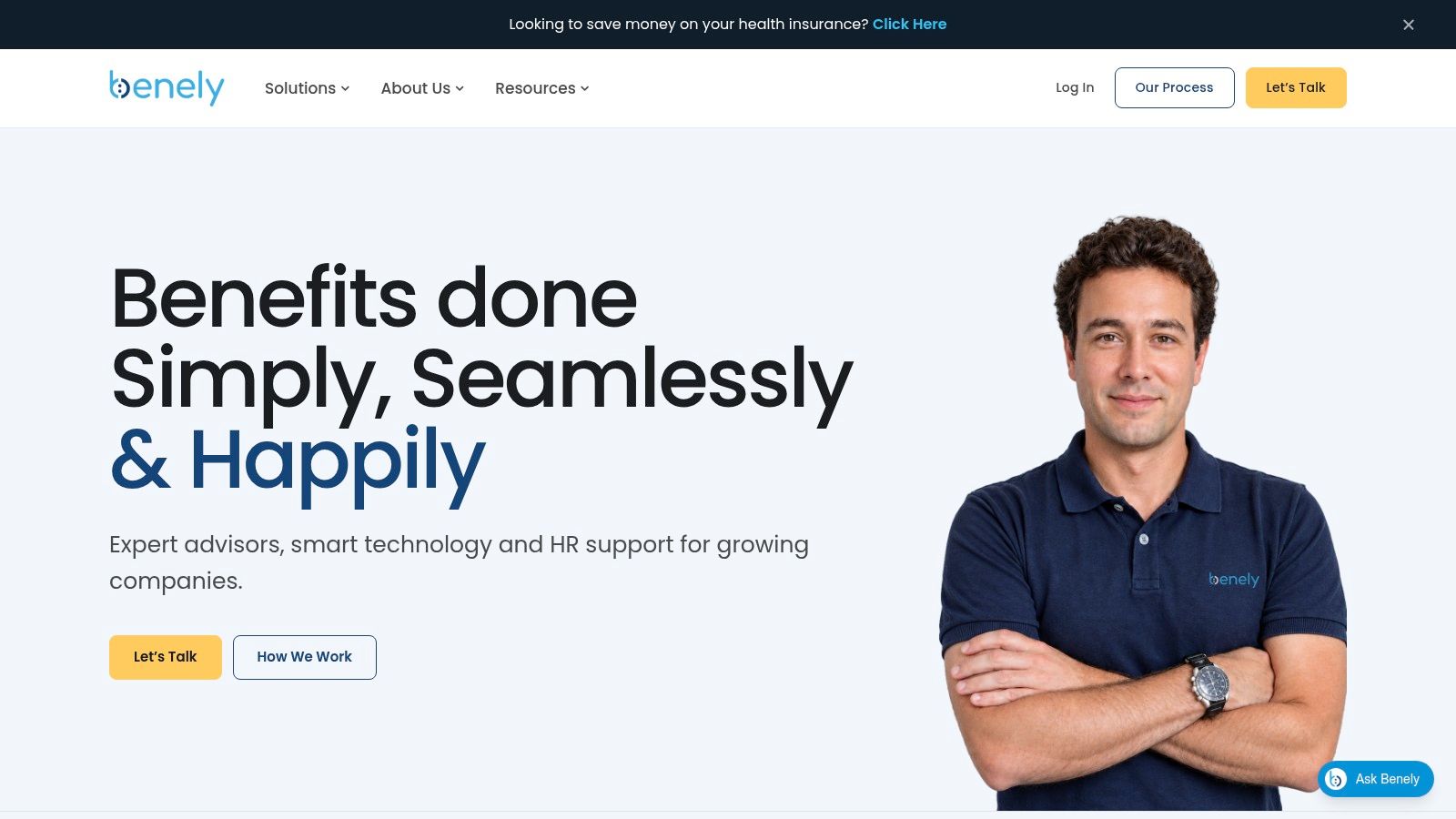
Employer commitment: a brokerage and HR partnership, not just a recommendation widget. Our approach suits businesses that need help choosing the benefits offering as well as helping employees enroll in it.
We compare more than 4,000 health plans from carriers including Aetna, Kaiser, Anthem, Blue Shield, and UnitedHealthcare, with choices shaped around the employer's budget. Our centralized employee platform supports benefits and HR management, enrollment tracking, and connected workflows, with the aim of completing open enrollment in days rather than weeks.
Where hands-on support changes the workflow
Before recommending a platform, we study the company's workflows, processes, and structure. We work with benefits portal systems and support connections across payroll, onboarding, time and attendance, and spending-account solutions.
Employees don't have to rely entirely on self-service. Our team answers questions by phone, chat, or email, helps with enrollment and claims, and provides custom benefits guides, videos, presentations, and individual counseling.
- Strengths: Benefits Advisors support plan design through compliance paperwork, with certified HR specialists providing additional guidance. We also offer wellness programs and comparisons across major PEO providers.
- Trade-offs: Pricing requires a conversation, and available plans depend on location, group characteristics, and eligibility. This is a broader service relationship than buying standalone decision-support software.
- Useful starting point: Our benefits benchmarking process and free benefits score help employers assess their current approach. Rating the process also provides a free 30-page benefits guide.
Customer testimonials emphasize responsive, knowledgeable, thoughtful service and support for recruiting and retention. Treat those accounts as service feedback, not a promise of identical outcomes.
For wellness planning beyond enrollment, employees can also browse perimenopause symptom tools. Keep educational resources separate from individualized coverage recommendations.
2. ALEX by Jellyvision
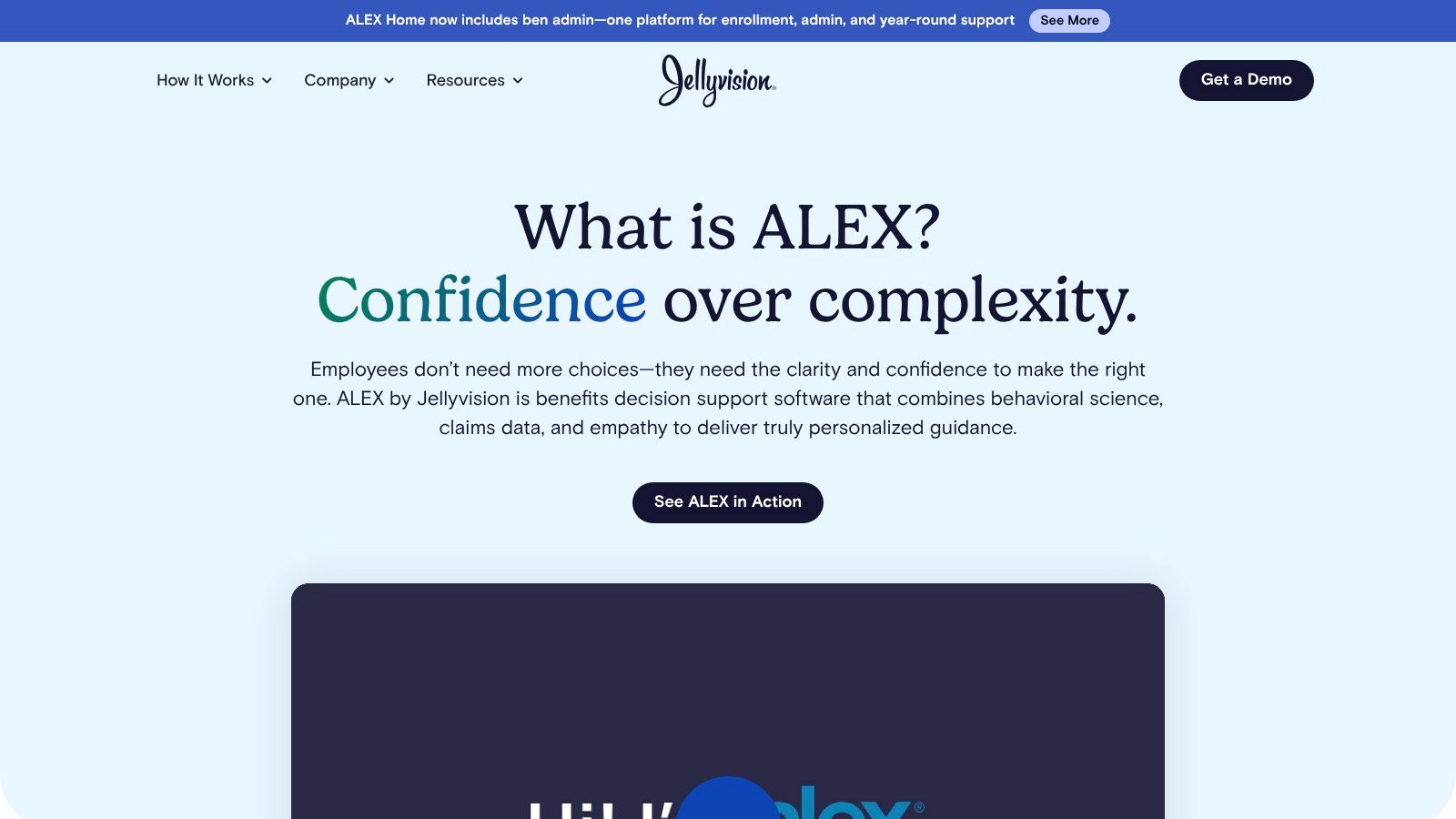
An employee who won't read a lengthy benefits guide may still work through a conversation about expected care and household finances. That's the practical appeal of ALEX by Jellyvision, an interactive guidance tool that explains benefits in plain language.
Employer commitment: usually a guidance layer, although enrollment capabilities depend on the package. ALEX covers medical plans, spending accounts, and voluntary benefits, with claims-based information available for personalization.
Its educational approach addresses a real need: a small peer-reviewed JMIR Human Factors study found that both tested decision aids improved health-insurance knowledge and literacy among 16 university employees making mock plan selections. That supports guided explanations generally, not a claim about ALEX's specific performance.
Demo test: Change an employee's expected care and ability to absorb a surprise bill. The explanation should change meaningfully, not simply rearrange the plan rankings.
What to validate
Supply accurate premiums, employer contributions, cost-sharing rules, and eligibility information. If claims data are involved, establish how employees can correct assumptions when next year won't resemble last year.
The upside is an approachable alternative to static materials. The friction is quote-based pricing, package differences, and potential customization work.
Confirm where guidance ends and enrollment begins. If employees must leave ALEX to make elections elsewhere, test that transition on a phone and verify that nobody mistakes a recommendation for completed enrollment.
3. Nayya
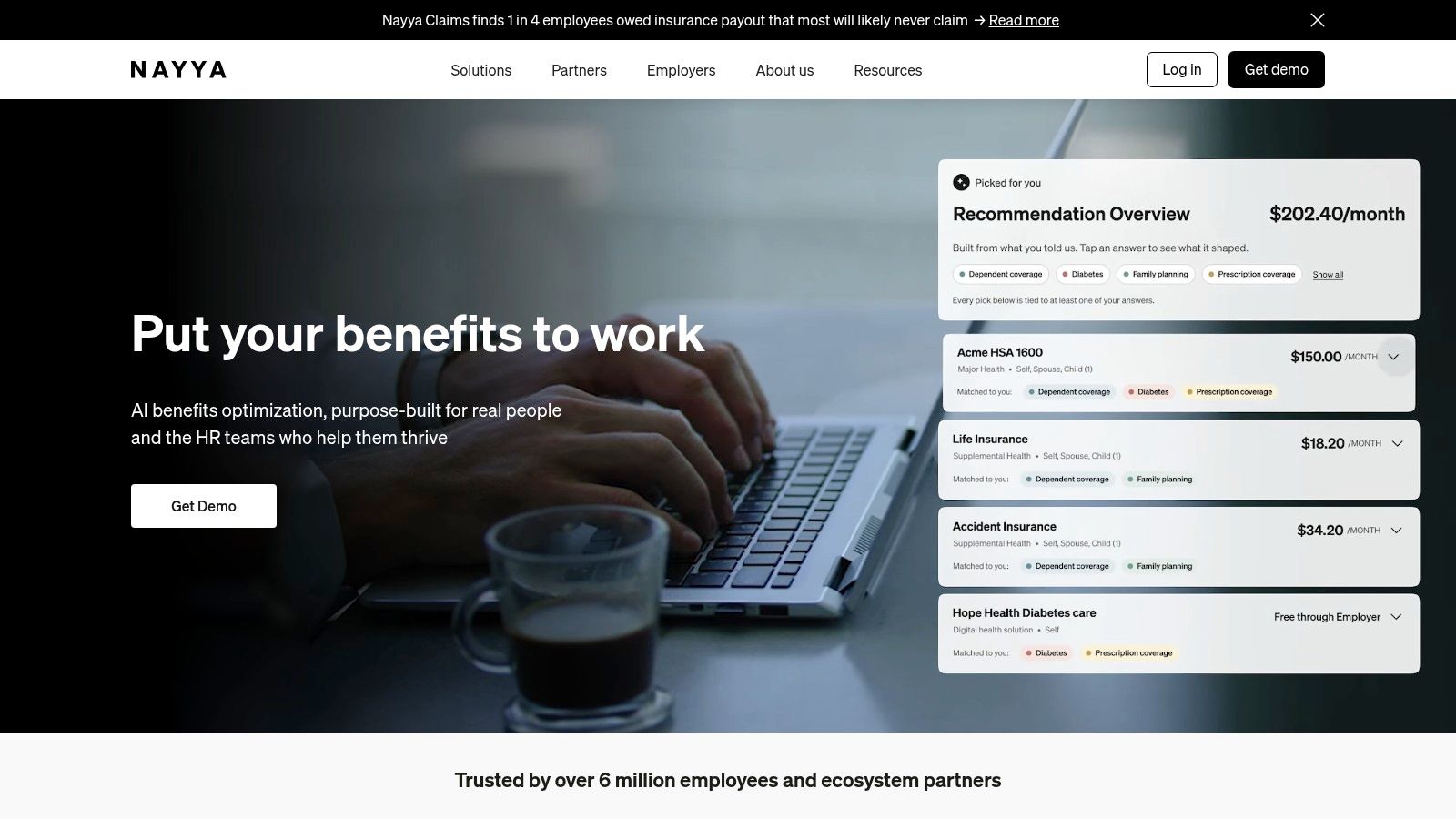
Nayya is a candidate when you want personalized guidance without immediately replacing enrollment software. Nayya's benefits platform uses employee-provided information, employer plan designs, and other benefits data to recommend options.
Employees can consider recommendations across medical, financial-wellness, and supplemental benefits, depending on the employer's setup. They can accept, change, or decline the suggestions, then complete elections in their employer's enrollment platform.
The handoff is the main buying question
Say an employee identifies a preferred medical plan but pauses before choosing supplemental coverage. Your demonstration should show what happens when that employee returns, whether recommendations remain available, and how they reach the correct enrollment screen.
- Data needed: Current plan designs, employee contribution amounts, household circumstances, healthcare needs, finances, and preferences.
- Best fit: Employers with a functioning enrollment system whose employees need a clearer starting point.
- Main limitation: Recommendations don't eliminate the separate election step. Inaccurate inputs can also produce an unhelpful starting point.
- Commercial friction: Public pricing isn't listed, and access is generally employer-sponsored.
Use a consistent method to compare health insurance plans before judging the recommendation engine. Provider access, prescription coverage, total expected spending, and financial exposure belong in that comparison.
I'd favor this arrangement when the existing administration platform works well. Replacing reliable payroll and enrollment processes solely to add guidance can create unnecessary implementation work.
4. WEX Enrollment Decision Support
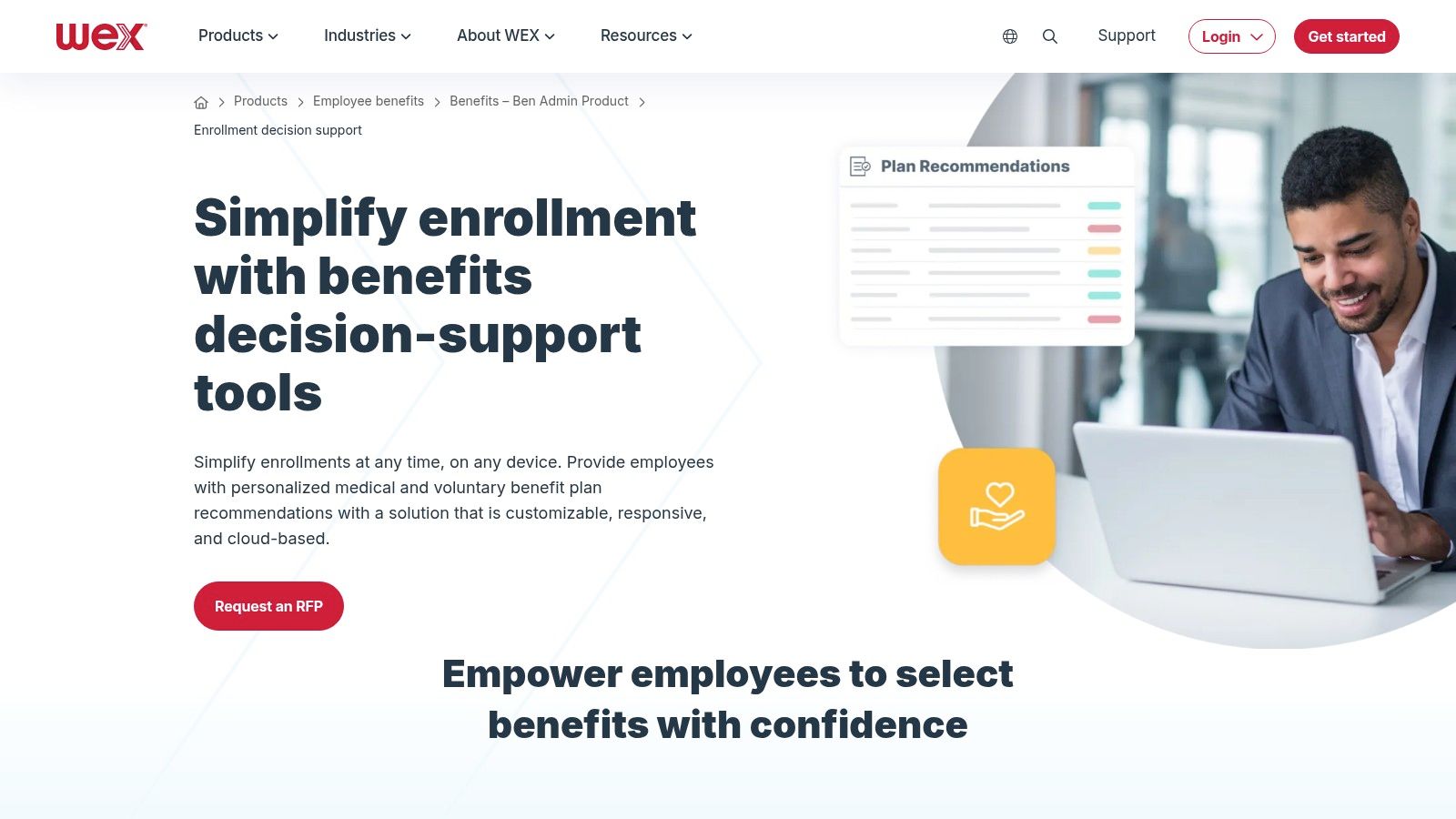
Medical-plan guidance and account decisions belong together. An employee evaluating a deductible also needs to understand the role of employer contributions and available spending accounts.
WEX Enrollment Decision Support sits within a broader benefits-administration portfolio. It gathers information such as medications, family circumstances, income, and risk preferences, then compares options and estimates potential costs.
Employer commitment: potentially a broader platform relationship, rather than a lightweight standalone purchase. WEX also provides voluntary-benefits support, life-insurance coverage estimates, videos, and benefits explainers.
Separate modeling inputs from coverage facts
WEX can use nationwide claims data, with individual claims data available for further personalization. Those inputs can inform estimates, but an employee's prescription formulary and provider network still require direct verification.
- What works: Presenting cost estimates beside plan details can make medical and related benefit choices easier to evaluate together.
- What needs checking: Whether estimates use general claims patterns, individual history, or employee-entered assumptions.
- What costs extra effort: Product configuration, integrations, data review, and determining which capabilities are included in the quote.
Employers reviewing employee benefits enrollment software should map the entire path from recommendation to election and account setup. Don't stop at an attractive comparison screen.
WEX deserves consideration when benefits administration and consumer-directed accounts are already part of the purchasing decision. Its pricing and configuration aren't publicly posted, so require an itemized proposal rather than assuming every portfolio capability comes bundled.
5. ADP Benefits Decision Support, powered by Nayya
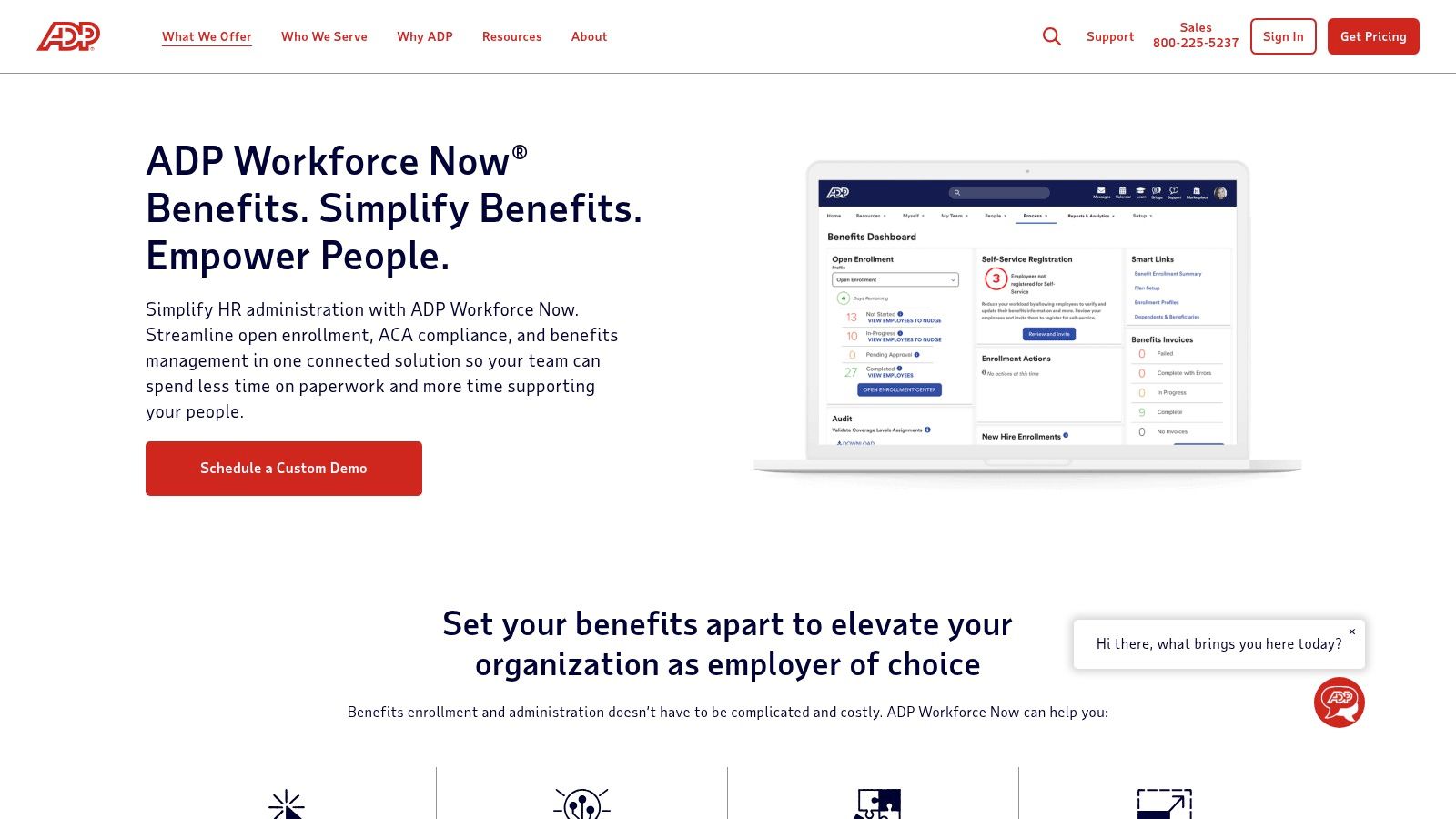
Already running ADP? Start by establishing what your current configuration supports before adding another employee login.
ADP's benefits offering includes Nayya-powered decision support within its HR and payroll ecosystem. Its Help Me Choose experience asks about health, financial circumstances, and personal preferences before presenting recommendations.
Employer commitment: extend an existing platform relationship, or accept a larger adoption decision if you're not already using ADP. The attraction is proximity to enrollment, payroll, and employee self-service, not access to a recommendation engine.
A shared platform is useful only if employees can move from guidance to a saved election without losing their place.
Test your exact product configuration
Availability depends on the ADP product and setup. Request a demonstration using your eligibility groups, contribution structure, dependent tiers, and employee access methods.
The broader offering includes mobile-friendly enrollment, employee self-service, analytics, and reporting. Verify which reports distinguish employees who viewed recommendations from those who submitted elections.
The trade-off is platform dependence. This option is less attractive if you don't want to adopt or expand ADP, and its quote should specify whether decision support is included or charged separately.
For existing customers, a connected experience may reduce switching between systems. Still, payroll data alone won't describe an employee's anticipated treatment, preferred specialist, or spouse's coverage, so employees need a straightforward way to add that context.
6. Paylocity Benefits Decision Support
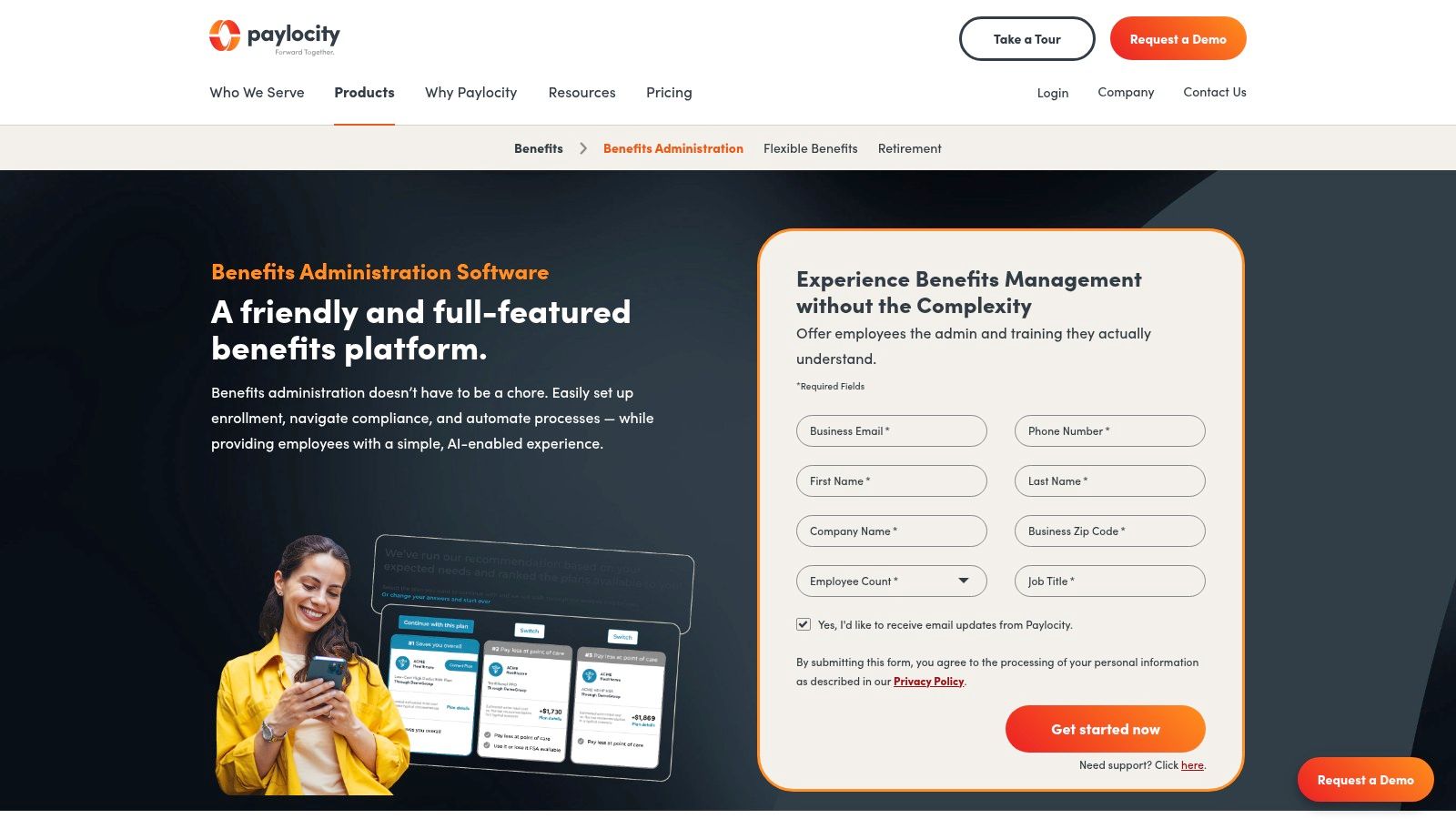
Paylocity fits a consolidation conversation better than a standalone-tool search. Its decision support is part of the wider HR, payroll, and benefits-administration platform, and its materials identify Reclaim as the underlying technology.
Paylocity Benefits Administration supports personalized recommendations and estimated-cost comparisons across medical plans, HSAs, FSAs, and selected supplemental benefits. Those can include hospital, accident, and critical-illness coverage.
Make the supplemental-benefit comparison earn its place
A recommendation should explain what additional coverage does, not merely suggest adding it. In a demo, use an employee with limited discretionary income and examine how the tool presents competing priorities.
- Workflow advantage: Guidance sits alongside step-by-step enrollment, mobile access, and broader HR administration.
- Inputs to prepare: Plan rules, employee contributions, eligibility, account options, and employee circumstances used in personalization.
- Commercial limitation: Public pricing for the feature isn't specified. Confirm availability and integration requirements for your setup.
The employee experience matters as much as the administrator's dashboard. A Selerix employee survey reported that only 16% of surveyed U.S. employees used a decision-support tool during enrollment.
That isn't a Paylocity adoption measure. It's a reason to test discoverability: can employees find guidance from the screen where they begin enrollment, and can hourly or remote workers complete it without a desktop computer?
7. Benefitfocus Benefitplace Decision Support
A household choosing between employer plans needs more than a comparison of the employee's own premium. Coverage available through a spouse or partner can change the decision.
Benefitplace Decision Support can consider household information, expected healthcare needs, risk tolerance, and relevant spouse or partner coverage. It combines recommendations across medical, dental, vision, and selected voluntary benefits with an employee portal and enrollment administration.
Employer commitment: a broader benefits platform. That may be worthwhile for complex household choices, but it can exceed what a small employer needs from a guidance add-on.
Household context creates a data-collection task
Employees need accurate information about outside coverage for a useful comparison. Demonstrate what happens when a spouse's plan information is incomplete, and whether the system clearly identifies assumptions rather than presenting false precision.
Communication also deserves attention: the Benefitfocus employee-benefits report found that 86% of employees reporting very or extremely good employer benefits communication felt confident in their decisions, compared with 32% among those reporting poor communication.
That association doesn't establish that software caused confidence. It supports pairing recommendations with clear explanations and accessible help.
The practical constraints are quote-led pricing, implementation scope, and changing feature availability. Require a demonstration of currently available household comparisons, reporting, and enrollment functions, rather than relying on a roadmap presentation.
8. PlanSource DecisionIQ
Localized cost estimates are useful only when employees can understand what they represent. DecisionIQ, offered through PlanSource, combines personalized recommendations, plan shopping, and localized cost comparisons within a benefits-administration platform.
Its described capabilities include health and voluntary-benefits guidance, coverage-level recommendations, and support for HSA or FSA contribution decisions. The integrated enrollment experience offers a route from comparison to election.
Examine the assumptions behind the estimate
Use your actual plan designs in the demonstration. Then change expected utilization, household coverage, and employer contributions to see whether the recommendation responds sensibly.
- Potential advantage: Localized modeling can make comparisons more relevant than a generic national cost illustration.
- Data dependency: Useful estimates require accurate plan provisions and clear assumptions about healthcare use and local pricing.
- Platform trade-off: This is a larger commitment than adding a standalone educational tool.
- Buying friction: Pricing isn't publicly posted, and included features, integrations, and data inputs depend on configuration.
Don't confuse modeled local costs with a confirmed price from a particular provider. Employees should still verify network participation, prescription coverage, and treatment-specific details before relying on a projected total.
For spending-account guidance, test whether the explanation distinguishes expected expenses from eligibility requirements and contribution rules. A helpful recommendation should show its reasoning and direct employees to authoritative rules when their household circumstances create uncertainty.
DecisionIQ is most relevant when enrollment and administration are already under review.
9. PERKY Benefits
Keep the enrollment platform, add targeted guidance. That's the appeal of PERKY Benefits, a modular decision-support and education product designed to work with existing systems.
Employers can configure support for health plans, voluntary benefits, tax-advantaged accounts, consumer education, and other offerings. PERKY combines side-by-side comparisons and estimated out-of-pocket exposure with personalized communications and human support.
Employer commitment: an additional guidance and communication layer, rather than necessarily a platform replacement. Its communications can extend beyond open enrollment to new hires, leave, and life events.
Scope discipline: Buy the modules employees need, and assign an owner to every transition between guidance, human help, and enrollment.
Modular doesn't mean implementation-free
You still need current plan information, contribution schedules, eligibility rules, and a process for maintaining content. Clarify who updates materials when benefits change and how employees return to the correct enrollment workflow.
What works: Employers can tailor the experience without automatically replacing functional administration software. Combining education with communication also gives HR more ways to reach employees than a single enrollment announcement.
What doesn't disappear: Another vendor relationship, a demo-and-quote buying process, and the need to define which modules are included.
Treat provider-published usage and satisfaction figures as vendor-reported measures, not independent ratings. Request definitions for engagement and completion, and establish whether reporting captures submitted elections or only activity within the guidance experience.
10. Healthee
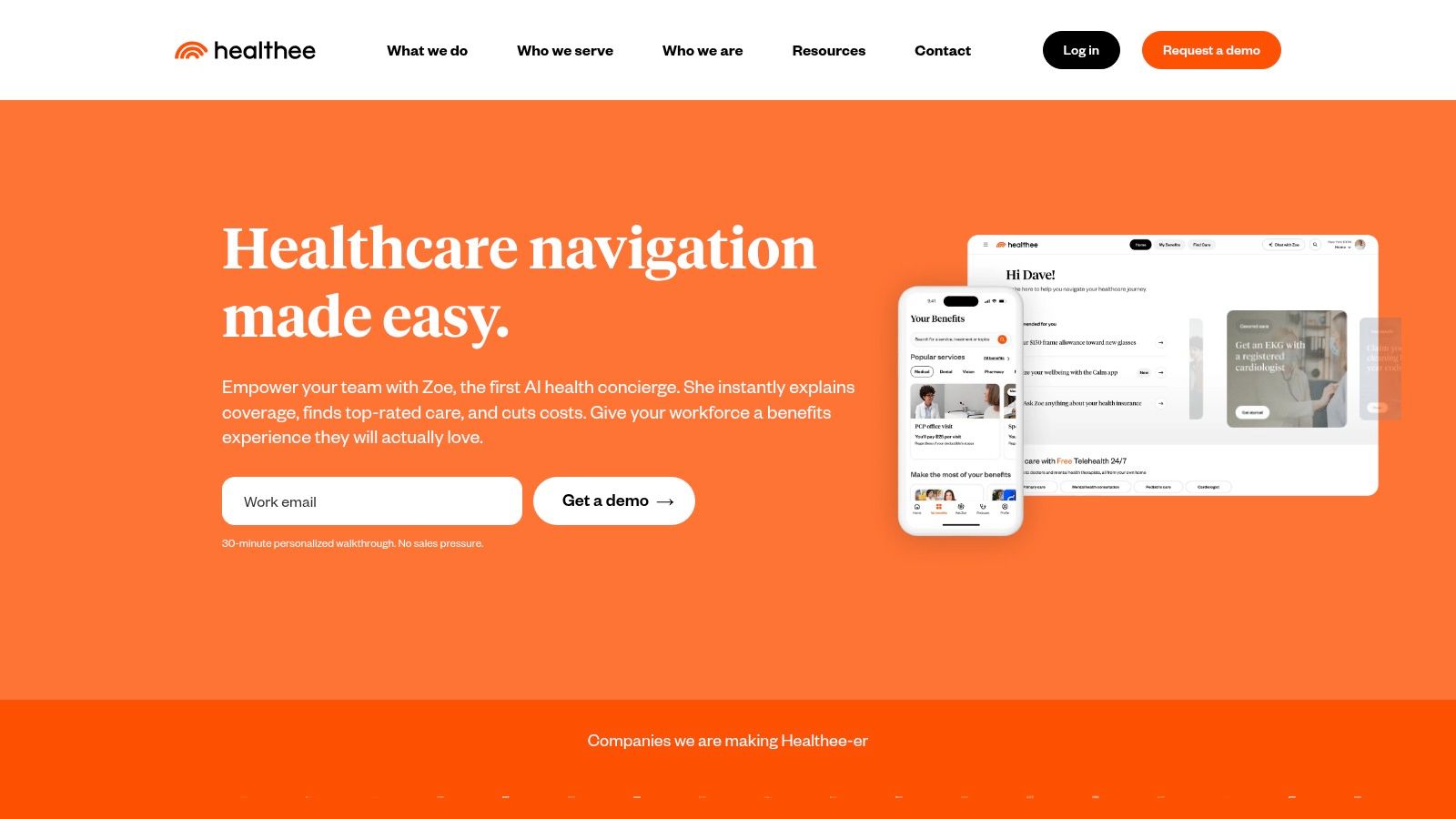
Enrollment ends, but employees keep asking how their coverage works. Healthee is primarily a year-round benefits-navigation platform with AI-supported plan comparisons and enrollment guidance.
It can use healthcare needs, family circumstances, and financial preferences to personalize guidance. The provider describes mobile-app and web access, alongside integrations with existing HR and benefits systems.
Buy navigation for a year-round problem
Employer commitment: a navigation layer alongside existing systems. Healthee doesn't replace the employer's enrollment platform, so employees still need a clear route to submitting elections.
- Potential value: Employees can seek help understanding and using benefits after enrollment, which may reduce repetitive questions reaching HR.
- Inputs that matter: Accurate plan information, eligibility, integration data, and employee-provided healthcare and household context.
- Operational checks: Confirm implementation timelines, supported integrations, included functions, and how unresolved questions reach human help.
- Commercial friction: Pricing isn't publicly listed, and purchasing follows a demo-led process.
Evaluate its cost explanations alongside a clear understanding of price transparency in healthcare. An estimate, a coverage explanation, and a provider's final bill aren't interchangeable.
I'd prioritize Healthee when employees struggle to use benefits throughout the year, not merely choose them. For a business whose only issue is an unclear enrollment chart, a continuing navigation subscription may be more than necessary.
Ask employees to test realistic questions on their own devices before deciding whether the additional access point will reach them.
How the 10 Benefits Decision Support Tools Differ in Pricing and Scope
| Item | Pricing Visibility | Standalone or Platform | Best Fit |
|---|---|---|---|
| Benely | Pricing not listed; contact vendor | Benefits brokerage and HR platform | Growing businesses seeking plan comparisons, benefits administration, and hands-on guidance |
| ALEX by Jellyvision | Quote-based | Guidance layer; may include enrollment capabilities | Employers seeking interactive, plain-language benefits guidance |
| Nayya | Pricing not publicly listed | Guidance layer that works with existing enrollment systems | Employers wanting personalized recommendations across benefit categories |
| WEX Enrollment Decision Support | Pricing not publicly listed | Part of a broader benefits-administration portfolio | Employers evaluating connected decision support and benefits administration |
| ADP Benefits Decision Support, powered by Nayya | Generally quote-based | Part of the ADP HR and payroll ecosystem | Employers already using ADP |
| Paylocity Benefits Decision Support | Feature pricing not specified | Part of the Paylocity HR and benefits platform | Employers considering consolidated HR, payroll, and benefits workflows |
| Benefitfocus Benefitplace Decision Support | Pricing and implementation require a vendor conversation | Part of a benefits administration and enrollment platform | Employers seeking household-level guidance within a broader platform |
| PlanSource DecisionIQ | Pricing not publicly posted | Part of the PlanSource benefits-administration platform | Employers seeking integrated guidance and enrollment |
| PERKY Benefits | Pricing not publicly listed; demo and quote required | Modular guidance product designed for existing enrollment systems | Employers wanting customizable education and decision support |
| Healthee | Pricing not publicly listed; demo-led sales process | Benefits-navigation platform that layers onto existing systems | Employers seeking year-round benefits navigation and enrollment guidance |
Choosing the Right Decision Support Tool for Your Enrollment Process
Start with the systems you already run. Identify your enrollment platform, payroll provider, employee portal, and the people responsible for maintaining eligibility and contribution data. Then decide whether the actual problem is confusing plan choices, weak communications, disconnected administration, or an uncompetitive benefits offering.
Don't replace a working platform just to acquire a recommendation screen. ALEX, Nayya, and PERKY deserve attention when guidance is the missing piece; Healthee adds a year-round navigation emphasis. ADP, Paylocity, WEX, Benefitplace, and PlanSource are more relevant when their surrounding ecosystem fits your existing operations or a planned administration change.
Require a demonstration with your own plans
Give shortlisted vendors your actual plan documents, employee contribution schedules, employer account contributions, and eligibility rules. Use contrasting scenarios, such as an employee expecting little care, a household managing expensive prescriptions, and someone considering a spouse's coverage.
- Verify the arithmetic: Check premiums, deductibles, coinsurance, out-of-pocket limits, and employer contributions against official documents.
- Challenge the ranking: Change expected utilization and risk preferences. Require an explanation of why the preferred plan changes or stays the same.
- Test missing information: See how the tool handles an unknown prescription, incomplete household coverage details, or unavailable claims history.
- Follow the election: Confirm that employees understand when they've received advice and when they've enrolled.
Confidence alone isn't enough. A Health Affairs study of Medicare Part D decision support found that expert recommendations improved satisfaction with the selection process but didn't reduce decision conflict. Employees should retain the ability to review alternatives and seek human help.
Price the operating model, not just the software
Require a written scope covering implementation, integrations, modules, communications, support, renewals, and data export. Review privacy permissions and establish who can access sensitive employee information.
Measure recommendation completion, enrollment completion, employee understanding, and requests for help. Segment results by access needs and work setting, so a successful office rollout doesn't conceal poor reach among hourly or remote workers.
Keep adjacent programs separate from enrollment recommendations. For example, the Acheloa Wellness coaching comparison guide may inform a broader leadership-development discussion, but coaching selection doesn't validate health-plan guidance.
For employers who need help evaluating technology alongside plan selection, administration, and compliance, our advisors compare current coverage with market options and review workflows before recommending a platform. We shop, analyze, and personalize the options, while the client makes the final decision.
Benely combines benefits brokerage, enrollment support, connected HR workflows, and year-round employee advocacy. Visit Benely to discuss your current systems and plan choices with advisors who can help you determine whether better guidance or broader administration support is the right next step.